Maria Positano
(London, 1995)
BIOGRAPHY
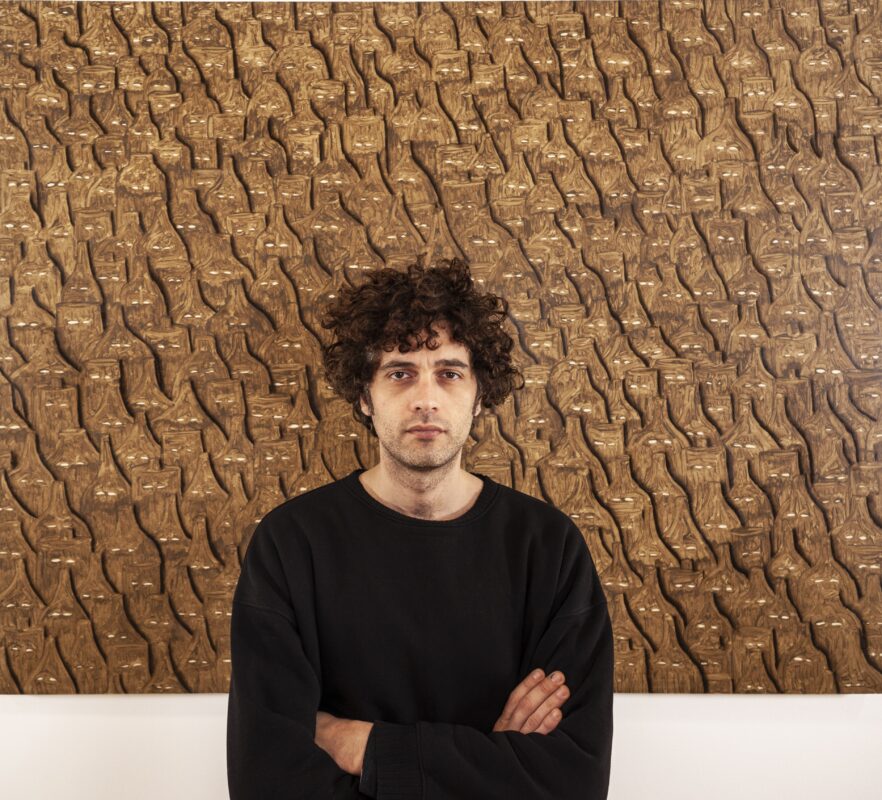
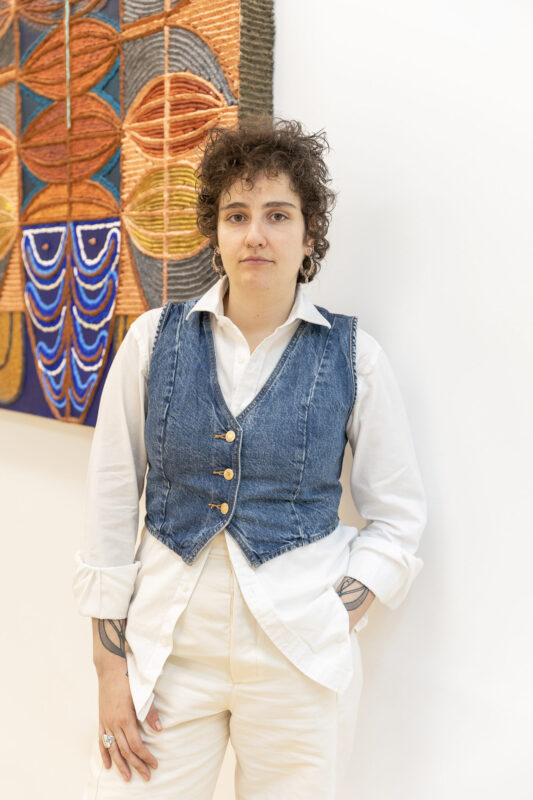
Maria Positano is an artist of Neapolitan origin who lives and works between Naples and London. Having lived between England, the United States, France and Italy, she draws on a life shaped by movement and cultural crossings to cultivate a fluid and multifaceted identity that underpins her practice. Educated at the City and Guilds of London Art School and the Royal College of Art, she has developed a visual language grounded in dialogue between cultures and continuous personal transformation.
Her work explores the body as a site of connection and vulnerability. Through sculptures and installations made from fragile or reclaimed materials and hybrid forms, she reflects on skin as a mutable armour — one that both protects and exposes, defining identity while opening it to encounter with others. Weaving together memory, gender and culture, her work creates open-ended, poetic narratives that invite reflection on the tension between protection and openness, individuality and otherness.
She has exhibited in major international institutions, including the Saatchi Gallery in London. Recent awards include the Gilbert Bayes Award from the Royal Society of Sculptors (2024) and the South Thames Colleges Group AiR Award (2023).
Major solo exhibitions: Tbc, Museo Civico Gaetano Filangieri, Naples (2026); Not from this place, Nashira Gallery, Milan (2024); A perfect place, Studio Block M74, Mexico City (2022); Take me Somewhere Nice, Lockbund Gallery, Oxfordshire (2020); Making Meaning, Subsidiary Project, London (2018).
Major group exhibitions: SP Arte, Sao Paolo, Brazil, presented by Orma Gallery (2026); Made In Vol. 3, Artissima, Lingotto Fiere, Turin (2025); Gilbert Bayes Award, Royal Society of Sculptors, London (2025); Il Peso del Vuoto, MARec – Museo dell’Arte Recuperata, San Severino nelle Marche (2024); Studio Responses #4, Saatchi Gallery, London (2023); Matter, Flowers Gallery, London (2023); Nascosti alla luce del sole, Nashira Gallery, Milan (2023); Felt cute, might delete later, Arusha Gallery, London (2023); Beyond the matter, Galerie Der Kunsler Innen, Munich (2023); Soft Monuments, Frestonian Gallery, London (2023); 2for1, Thorp Stavri & Haze x Hyphastudios, London (2023); Hung Drawn Quartered, Staffordshire St Studios, London (2023); The Appearance Formula, Andrea Festa Fine Art, Rome (2022); La Camaleona, Galeria 54, Mexico City (2022); One By One, Fiumano Clase, London (2022); Discoveries 2020 – The Biting Point, Fiumano Clase, London (2020).
Statement
Maria Positano’s practice features sculpture, installation and two dimensional work. She often starts working by looking at Greco-Roman armour suits: with particular interest in the current dynamics of warfare, armour is seen as its prototype and is used by the artist to comment on its inherent values.
Historically, armour has been associated with militarism and conquest, symbolising the power and authority of those who possess it. In the context of gender dynamics, this metaphor reflects on the ways in which patriarchal structures perpetuate violence and subjugation, reinforcing hierarchies of power and privilege. The artist believes that challenging and dismantling the metaphorical armour requires addressing the underlying values that it embodies.
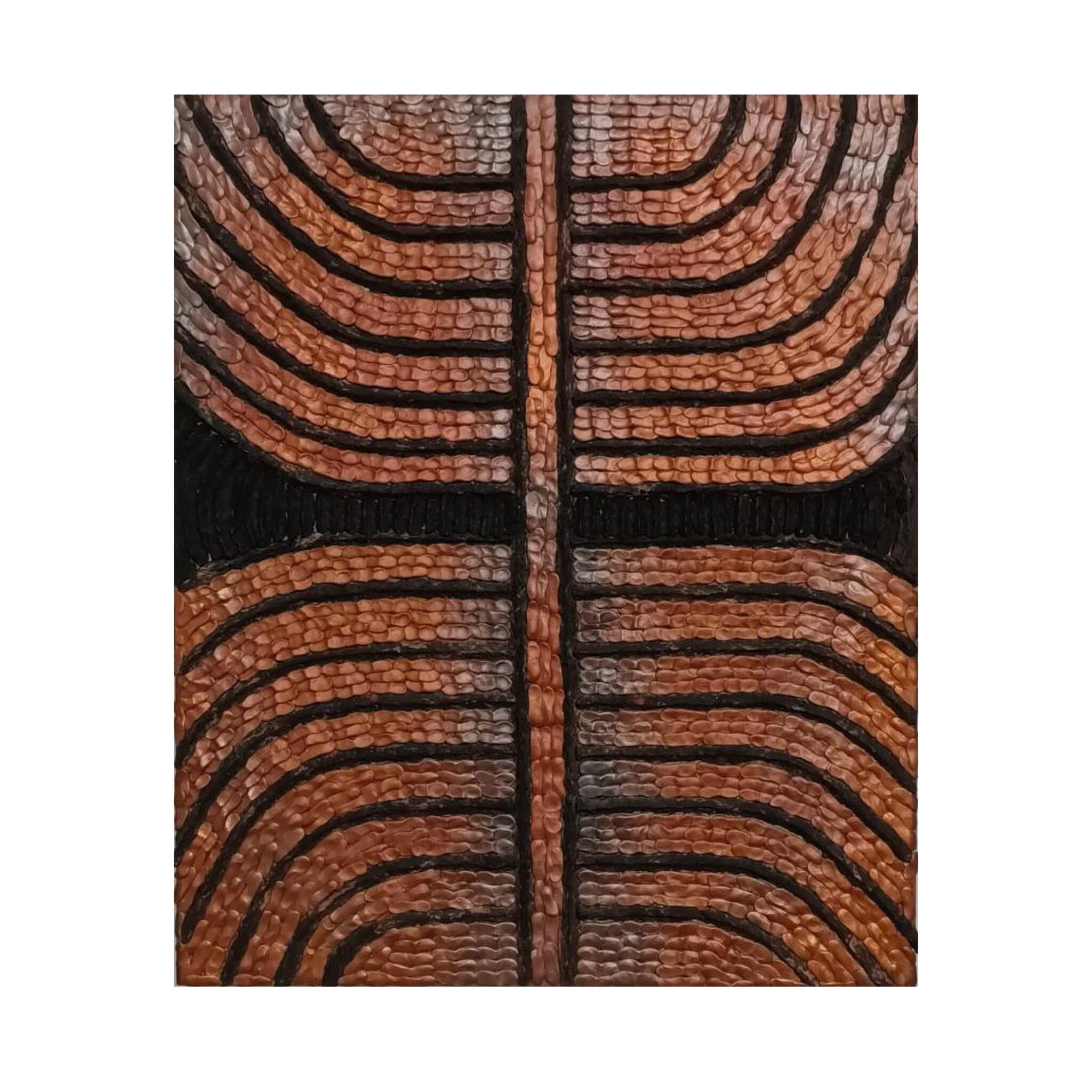
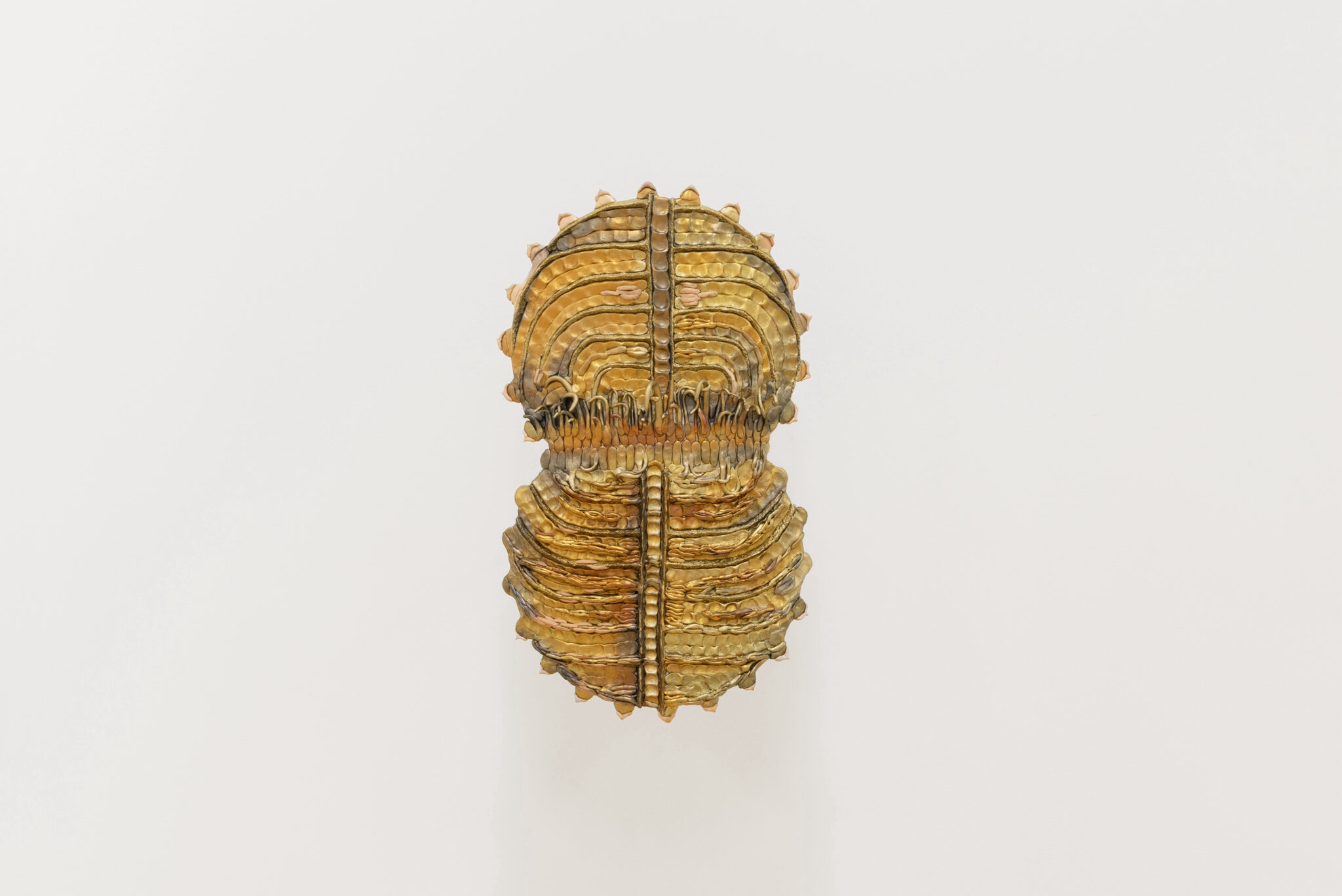
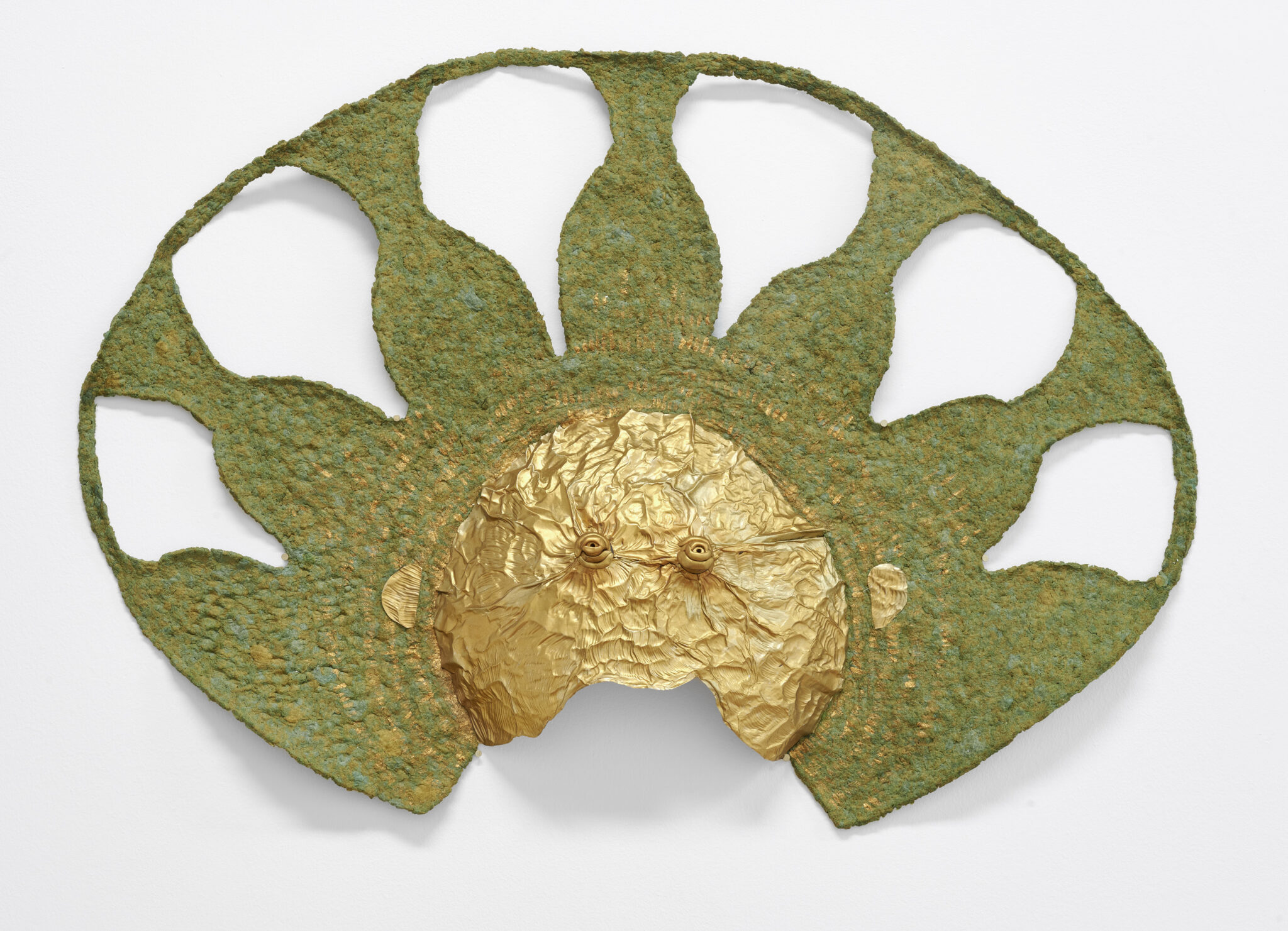
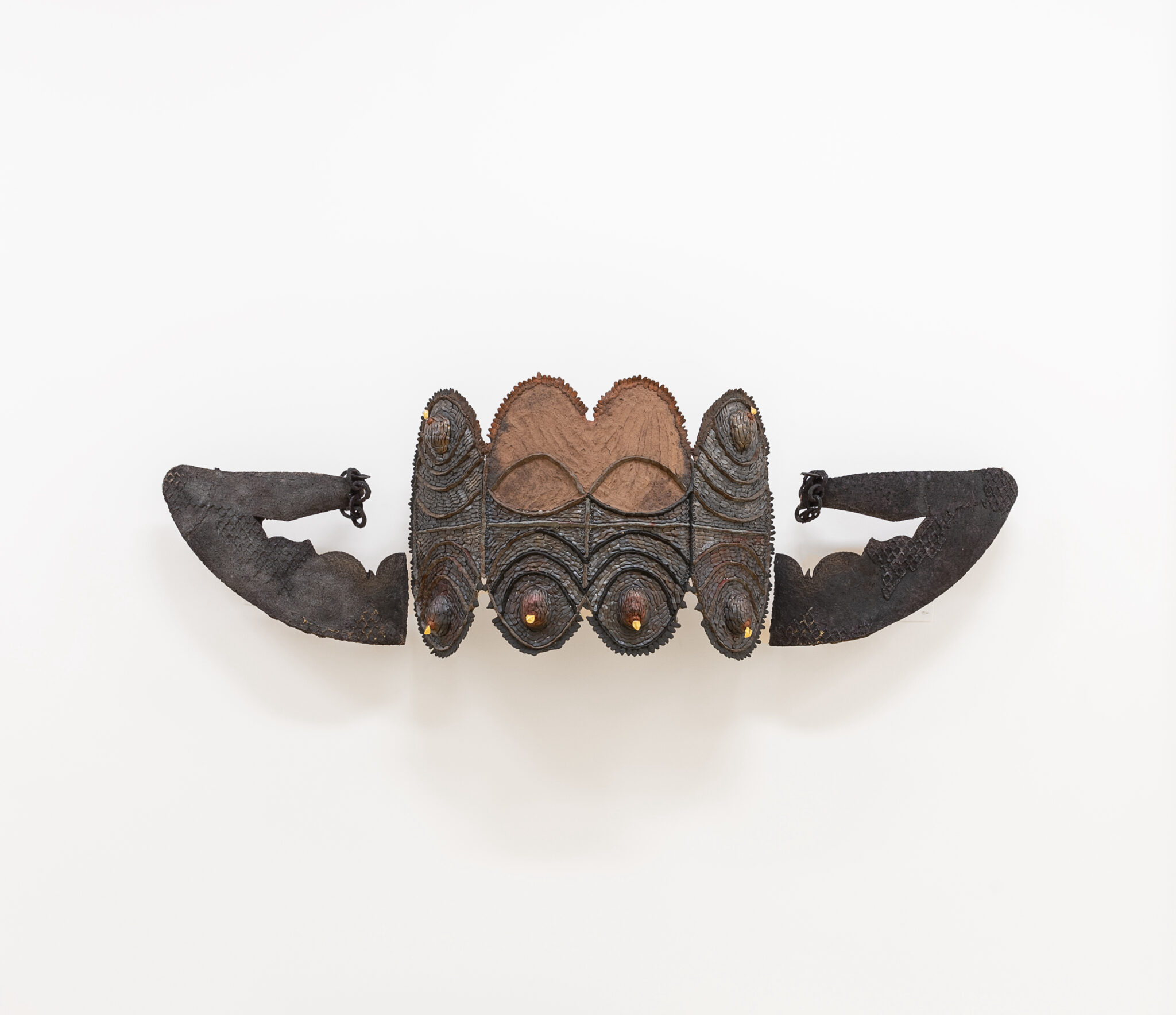
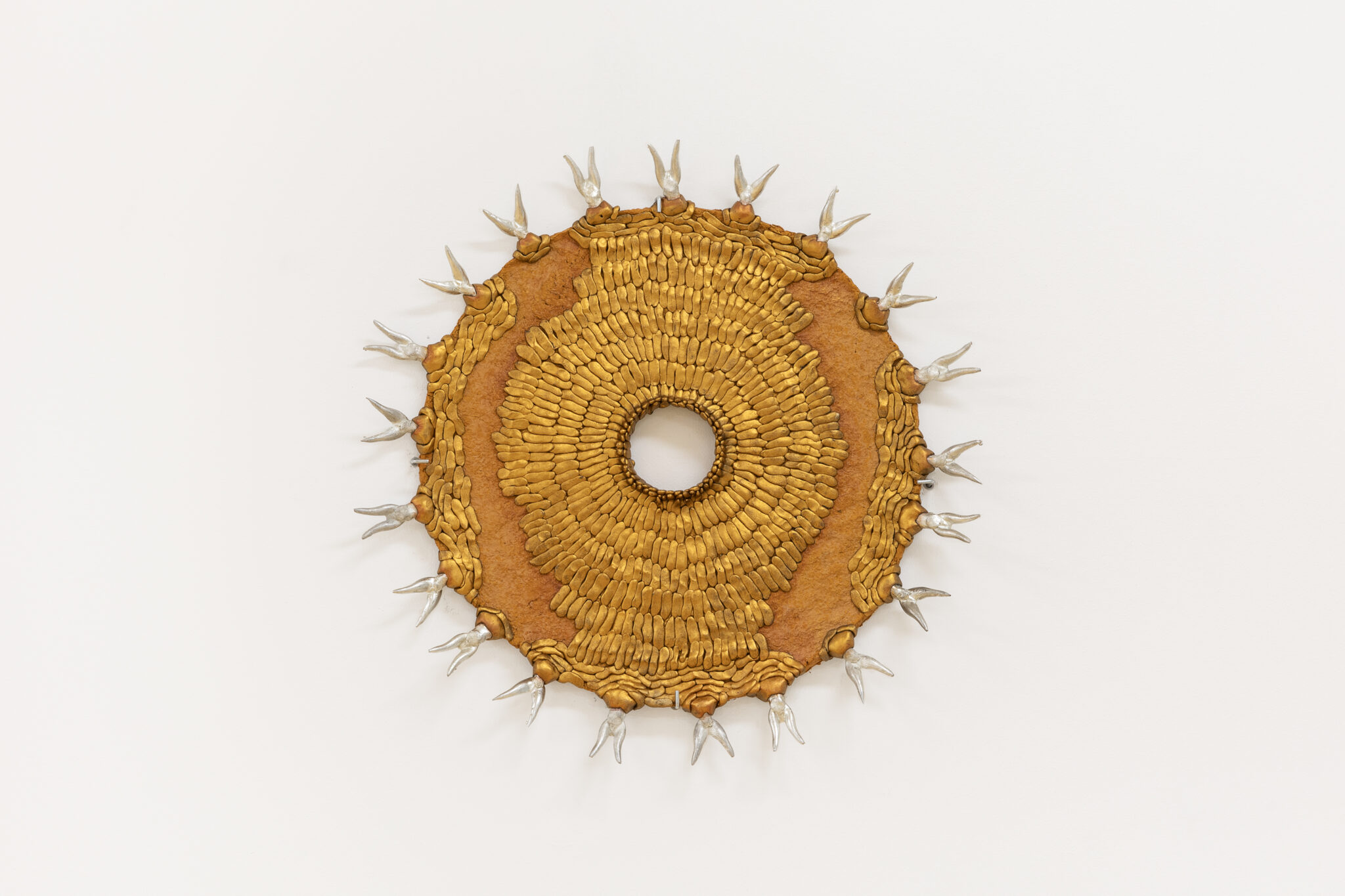
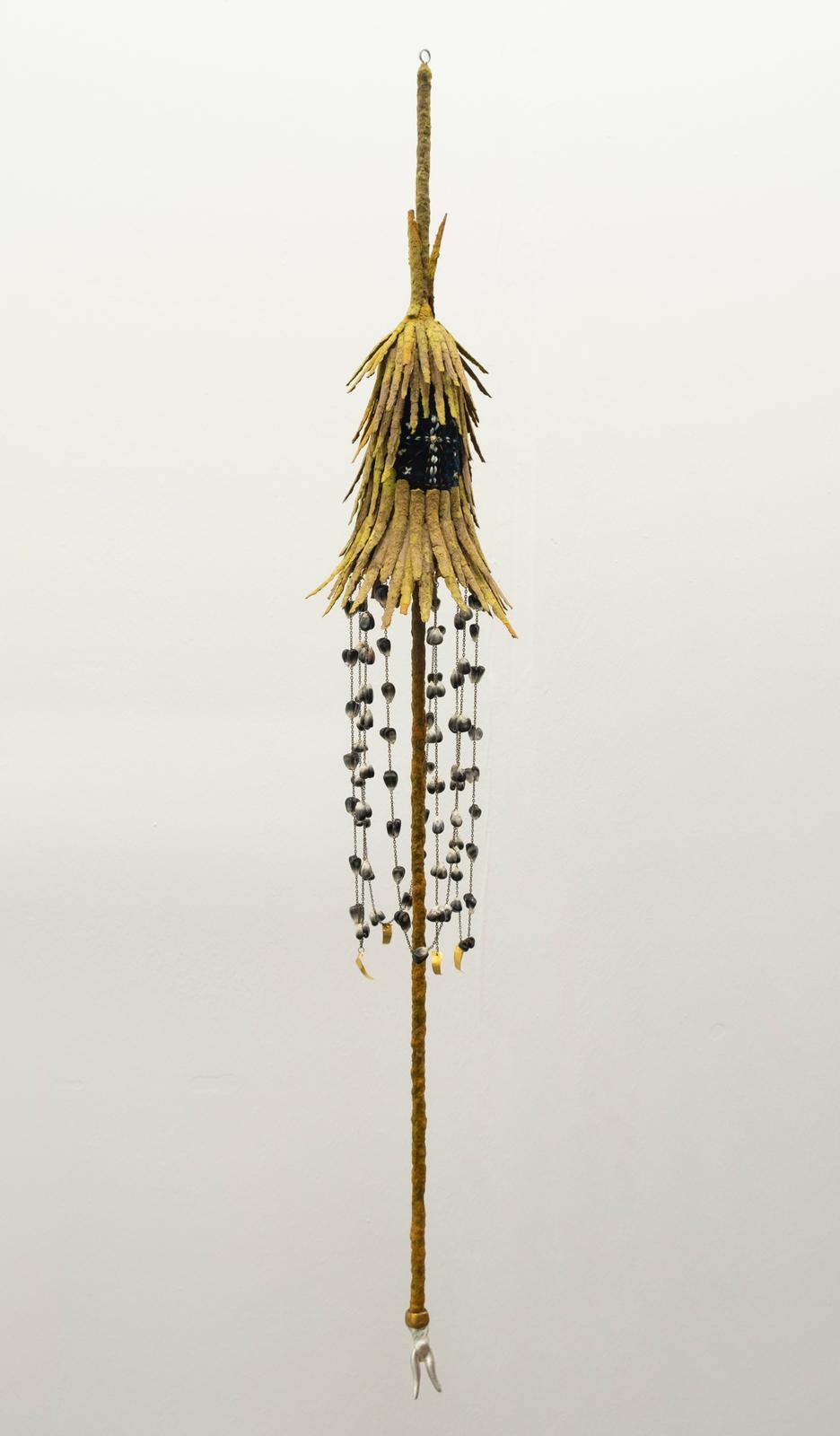
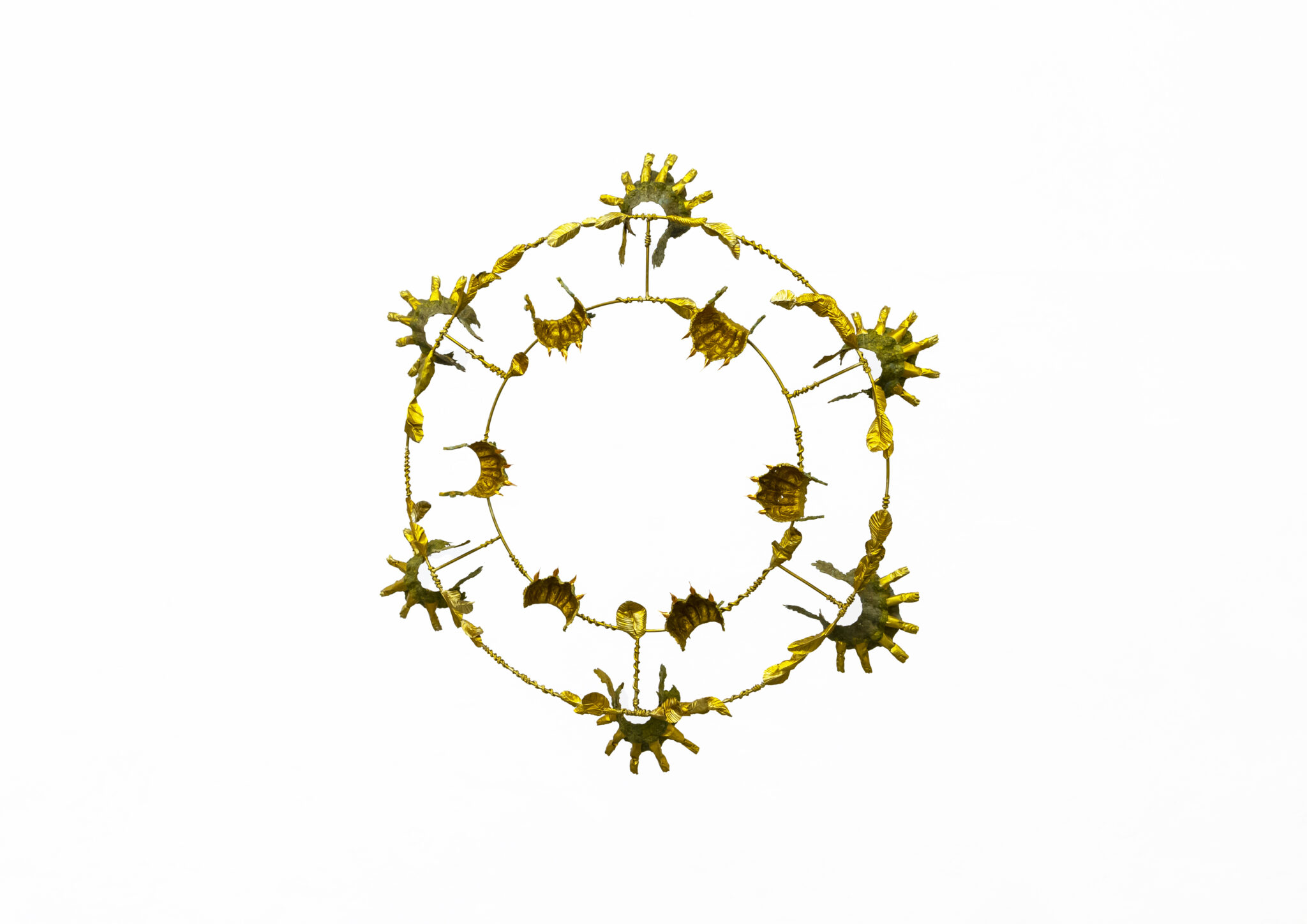
By crafting armour from paper pulp and up cycled fabrics and clay, Maria Positano subverts expectations of strength and durability associated with conventional armour, furthermore treating the surface to age the materials, making them feel fragile. Instead of relying on physical toughness, the wearer must rely on alternative forms of resilience and adaptability. These body-like hybrids can be seen as different declinations of the artist’s individuality.
By queering materials Positano is reimagining connotations and uses of ordinary armours in order to challenge narratives, reinterpreting the meanings and symbolism associated with those materials, all the while creating seductive material illusions.
Paper, typically associated with fragility and temporality, is transformed into a form of protection, inviting a revaluation of what constitutes strength and resilience, challenging binary notions of vulnerability and invulnerability. These ‘reversed armours’ become anthropomorphic bodies and are often gender ambiguous: breasts and legs become protection and armour, reconfiguring the body anatomy itself.
The artist sees this practice as a metaphorical exploration of authenticity, vulnerability, and resistance, inviting individuals to assert their identity and reclaim their narratives in the world.
Maria Positano works on a sense of humanity, aiming for the viewer to experience the sculptures through their body image, that often encourages through mirroring the scale of the body itself.
EXHIBITED WORKS