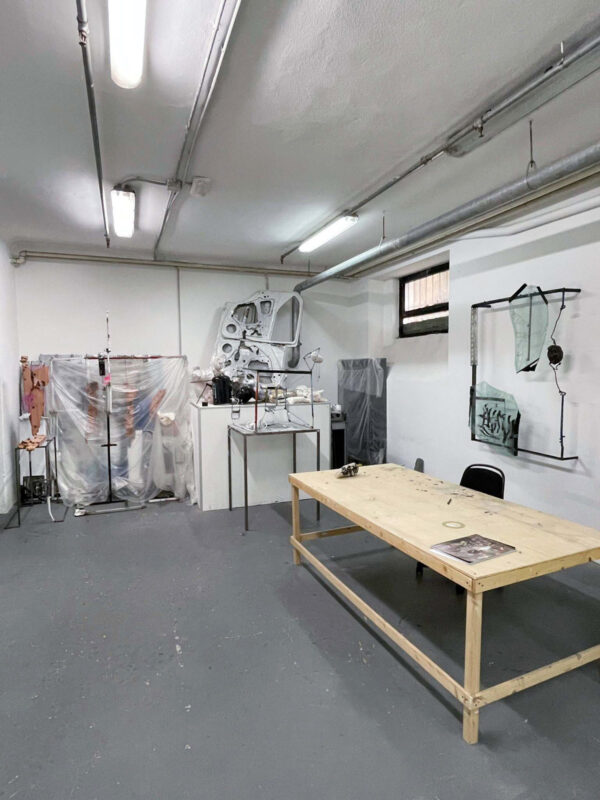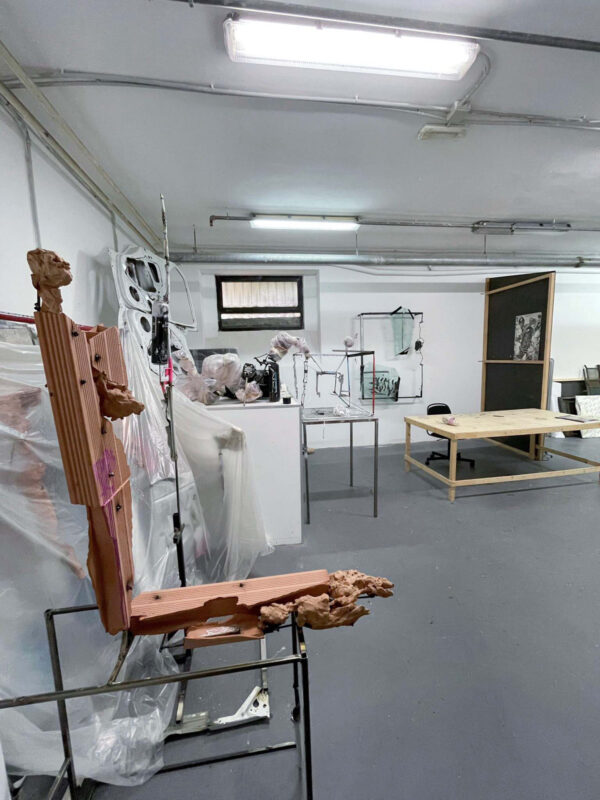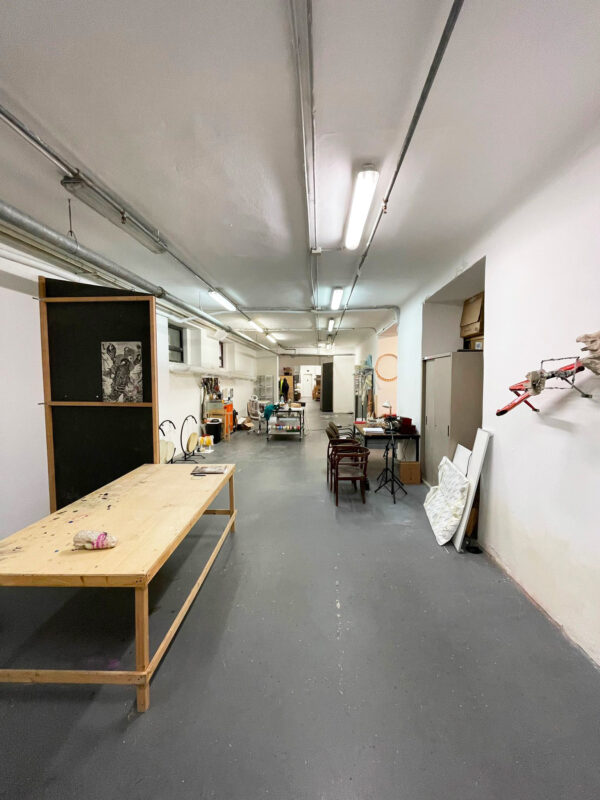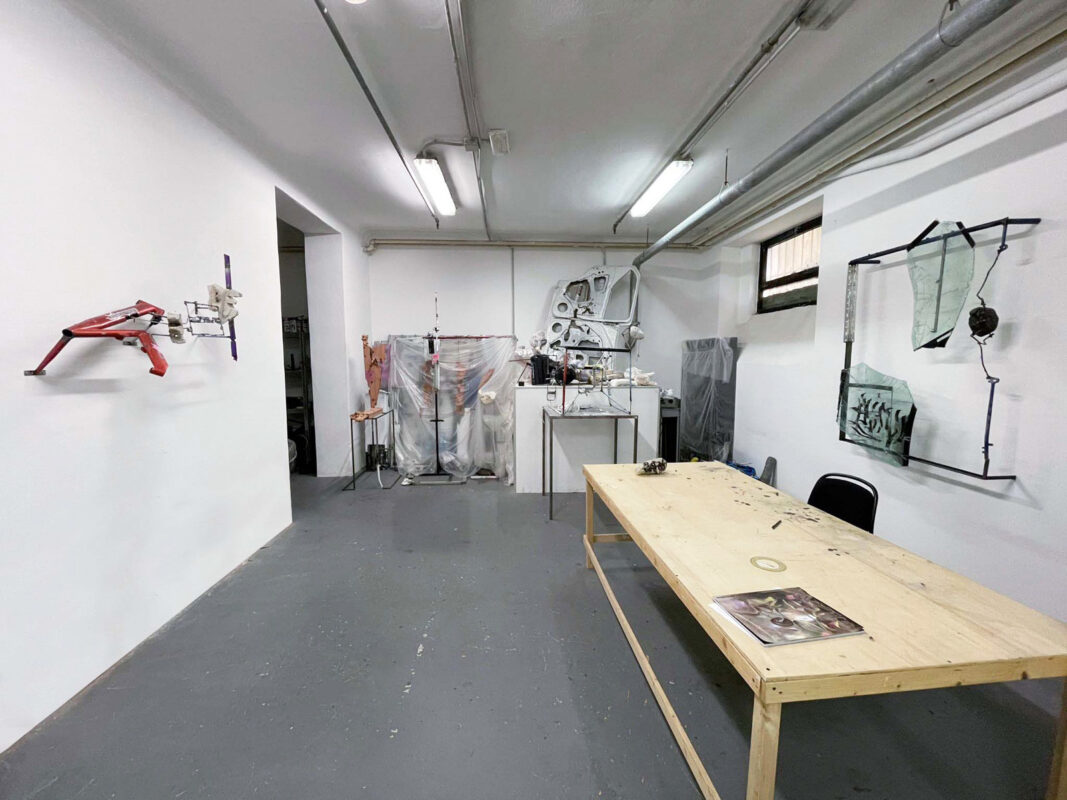

- Recycled Materials
You use materials such as iron, scrap metal, tyres and industrial or rural fragments. How do you select these elements, and what role do they play in your work?
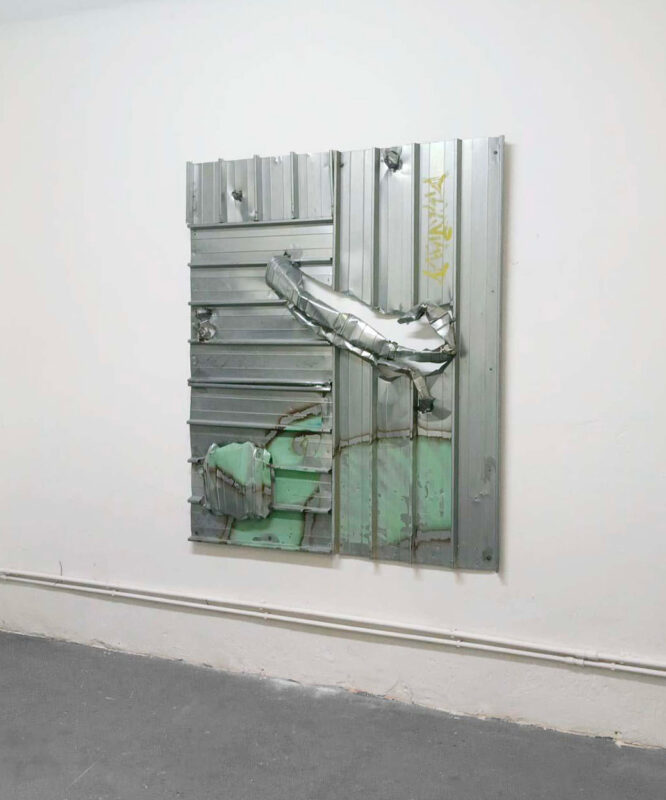
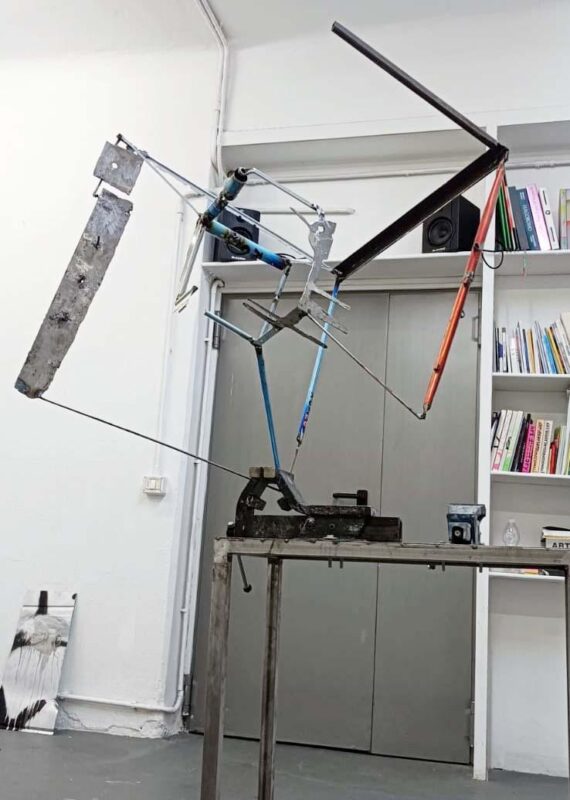
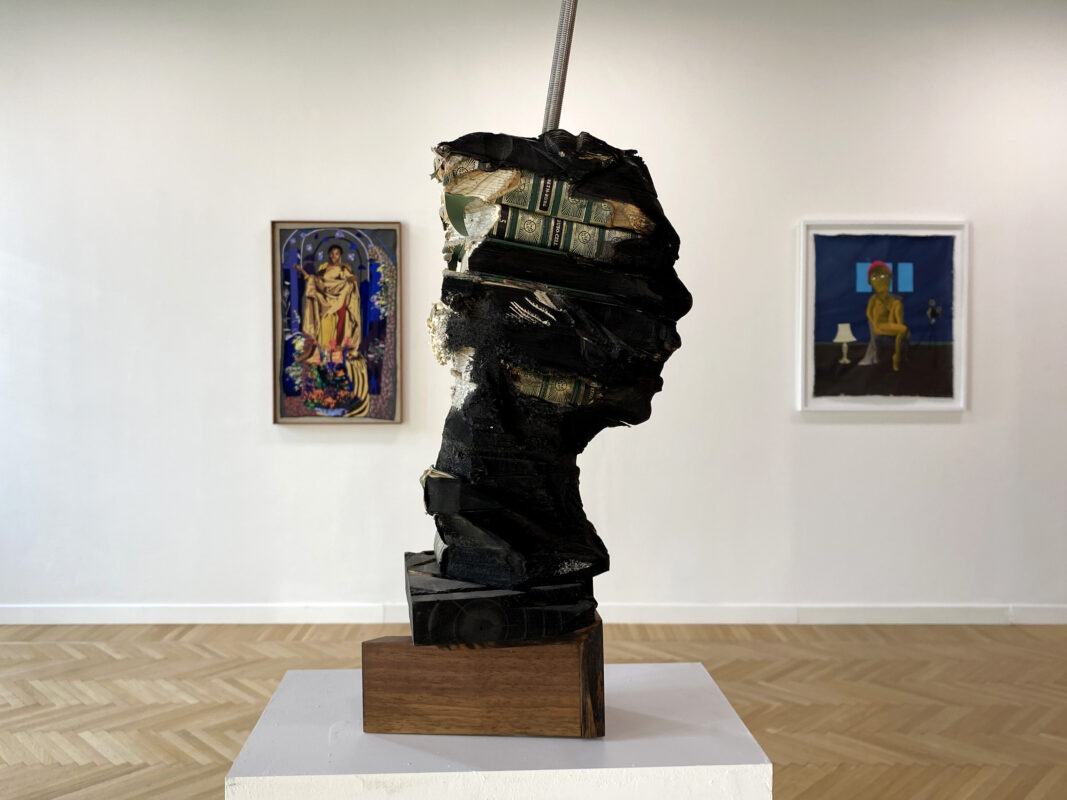
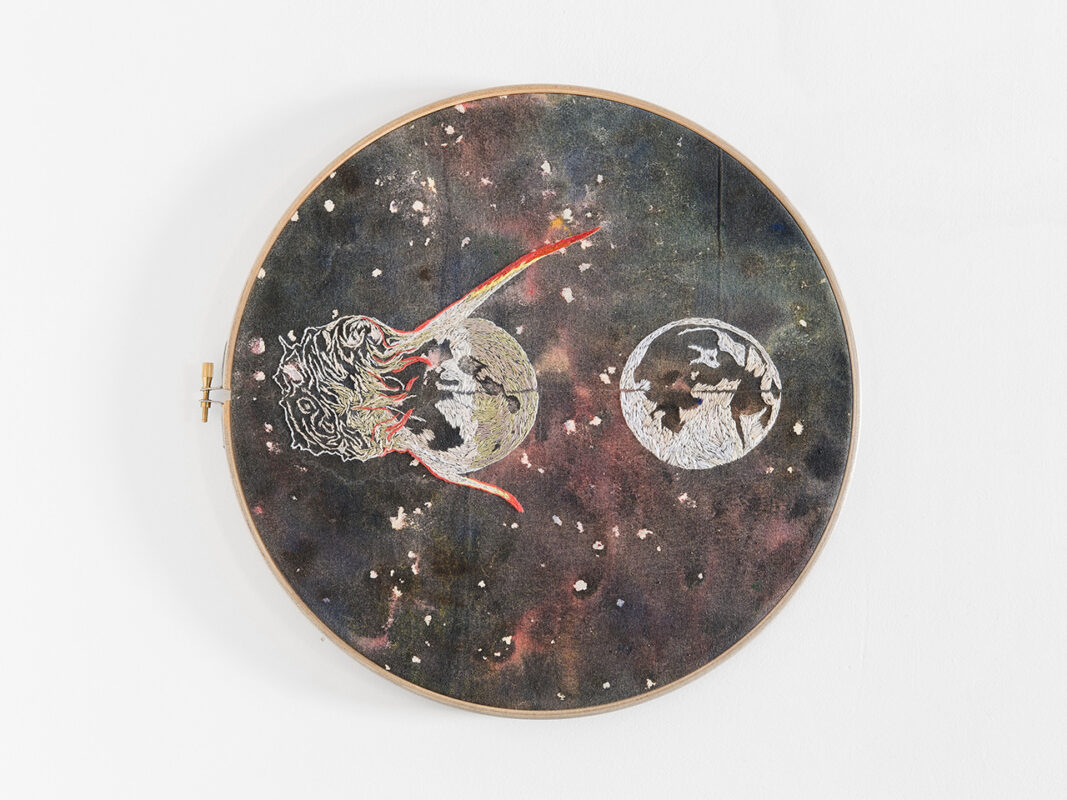
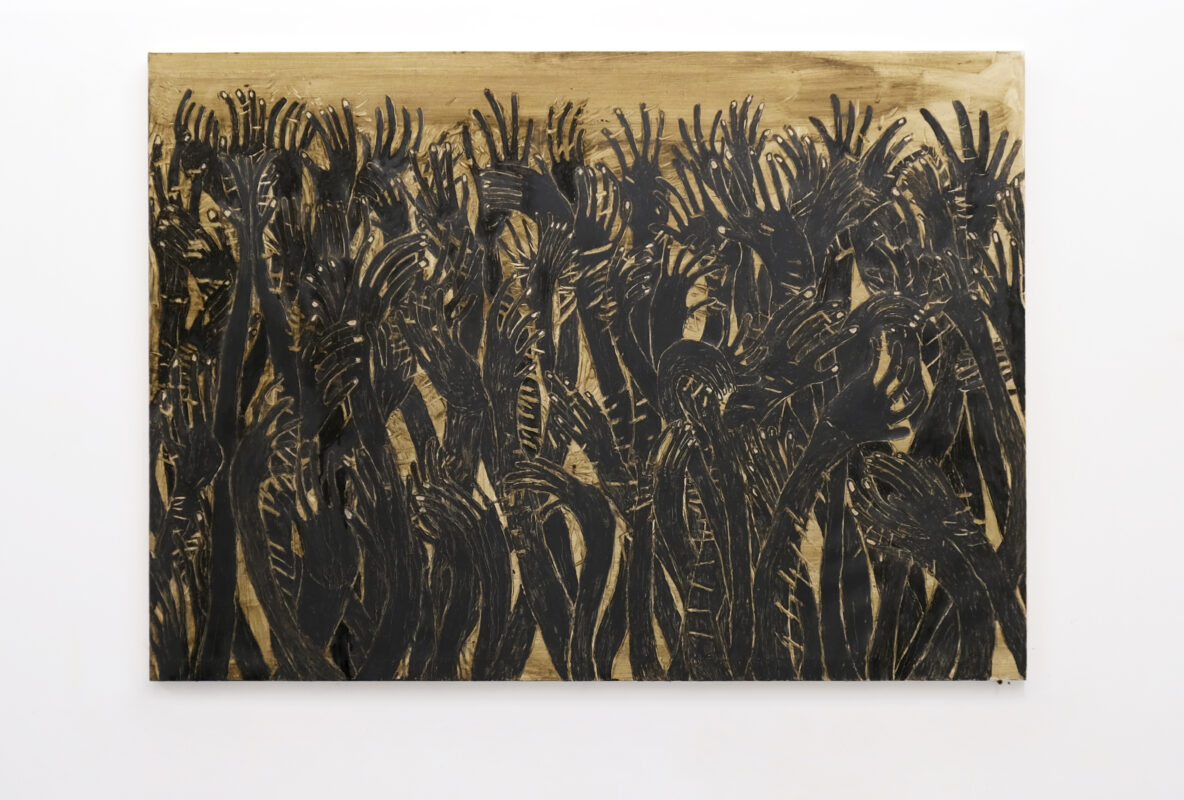
Primitivism in the post-human is the starting point of my research: a way of thinking and creating that reworks the legacy of mythical thought through contemporary materials. In Lévi-Strauss’s definition, primitivism manifests as a combination of fragments of events, an approach that over time has become the basis of my work, including pre-existing elements and transforming them into new expressive possibilities. I don’t find authenticity in works created with new materials; I perceive them as lacking soul and memory, and as being in conflict with a sustainable vision of the world. I recognized this same attitude in the place I come from, the South of Italy, and in many peripheries of the world where remnants of industrialization are reused and adapted for new functions. It’s a form of cultural resistance that reconnects the past with the present and restores value to what has been forgotten. In an era marked by overproduction, this practice becomes a way to speak the language of my time, shaping the true nature of the environment I inhabit.
- Between Archeology and the Present
Many of your works evoke ancient forms placed in a contemporary context. How do you build this dialogue between past and present?
According to Darryl Anka, our perception of past, present, and future is actually the mental translation of an experience that moves through an infinity of parallel realities, a succession of life moments that manifest billions of times per second. From this perspective, the future and the most remote past coexist simultaneously in an eternal present. This non-linear vision of time finds resonance both in the spiritual practices of ancient civilizations, such as those of Native Americans, Egyptians, or the Maya, who viewed time as cyclical rather than linear, and in some recent quantum mechanics studies, like Wheeler’s delayed-choice experiment. In my work, this awareness is expressed through a multidimensional practice that draws on the symbolic and ritual approach of many ancestral cultures, where each element becomes a bridge between different worlds and times.
- Chance as a Method
Your practice seems to leave room for the unexpected and the uncontrolled. How important is chance in your creative process?
I believe chance is the most important aspect of my work. It doesn’t arise from a mental process but from a bodily experience in which action becomes a blind encounter with otherness. Error is the channel through which matter regains precedence over form, restoring its ability to express itself without control or intention. In this way, a deep connection is created with what surrounds me, a feeling of belonging to the whole, as if the boundary between myself and the world were dissolving. It’s an attempt to rediscover that balance lost over the last millennia, in particular — as some antropologists note – since the Neolitic, when humans began to place themselves above nature rather than in relation to it. Deleuze and Guattari, in A Thousand Plateaus and Anti-Oedipus, describe matter not as a passive object to be dominated, but as part of an immanent flow of forces and intensities. Similarly, in my work, error becomes the space through which the relationship with matter — to use Julia Kristeva’s words — overflows the boundaries of subject and form, generating the uncanny, the monstrous, the living.
- Collective Practice and Shared Research
You have launched projects such as OMUAMUA and, more recently, an artist residency in Bosnia. What do you seek in these collective contexts, and how do they enrich your research?
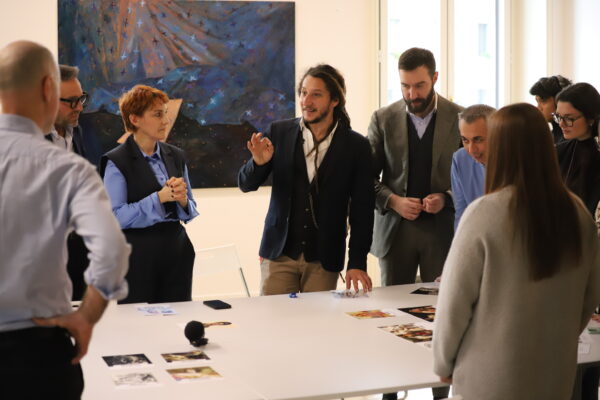
Shared study and dialogue with artists from different backgrounds have been central to my formation. This exchange helped me question my path and better understand the direction of my research, identifying what I could offer personally, based on my background. In 2019, together with Luca Pozzi, I founded OMUAMUA, an independent space in Milan created with the aim of extending the experience of sharing and collaboration to a wider community. OMUAMUA stands out for its horizontal and inclusive approach and today represents one of the most active independent spaces in the city, with a stable group of nine people and numerous exhibitions produced. In 2024, I launched the Bosnian Pyramid Residency, following a volunteering experience at the Bosnian Pyramid of the Sun Archaeological Park Foundation and several years dedicated to studying and promoting the excavation materials in Italy, contributing to their translation and dissemination. This project was born from the desire to intertwine contemporary art and interdisciplinary research, fostering dialogue between past and future. My personal work is closely linked to these collective projects, which I consider an integral part of my artistic practice. I relate to Joseph Beuys’s vision and his idea of social sculpture, in which every gesture capable of generating transformation is an artistic act. In this sense, I see my projects as collective sculptures, forms of relationship, dialogue, and cooperation that make art a social and transformative process, capable of creating new awareness and communities.
- The Sinai Phone Exhibition
What did Sinai Phone at the Nashira Gallery mean to you? Did it mark an important transition in your career or artistic language?
Sinai Phone was a solo exhibition of great importance to me, presented at Nashira Gallery in Milan. It came after a period of deep insight and transformation in my artistic practice: I felt the need to define my language more strongly, making it more recognizable and aligned with my inner research. Nashira Gallery gave me trust and space to express myself freely, which pushed me to give my all, bringing together all the tools and experiences I had gained over the previous years. I devoted the entire year of 2023 to creating new works that represented this evolution. I created thirteen new sculptures made with salvaged iron, stone, and terracotta, materials chosen for their symbolic charge and material memory. In these works, past and future intertwine in a language I would describe as post-apocalyptic, a reflection on origins and destiny, on the survival of form and spirit in a transforming world. The title, Sinai Phone, I borrowed from a small phone shop in Corsico. I was struck by the power of contrast between Sinai – the mountain from which, according to tradition, God called Moses — and Phone, a symbol of contemporary communication. That linguistic short-circuit perfectly captured the theme I wanted to explore: the relationship between human and divine, earthly and extraterrestrial, placed ironically within a familiar, almost peripheral everyday context, close to real life.