1. References to the Middle Ages
Your work clearly evokes the Middle Ages, both through its symbols and atmosphere. What draws you to this historical period, and how do you interpret it in the context of contemporary painting?
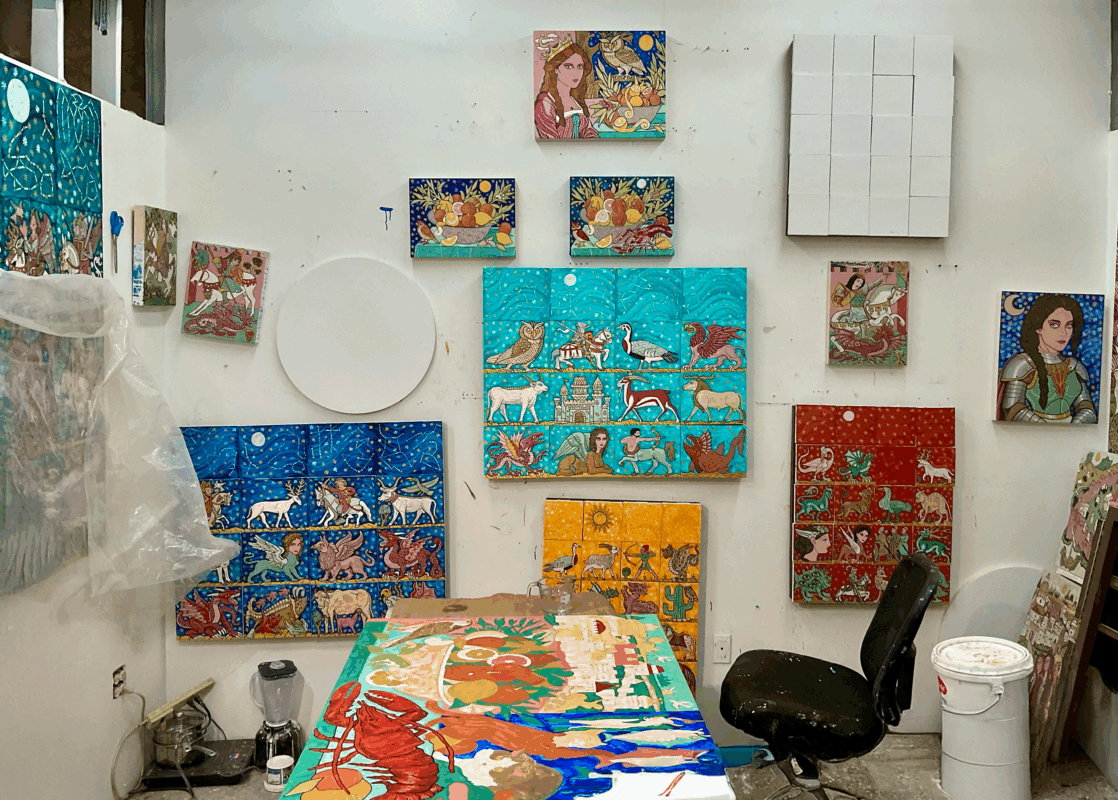
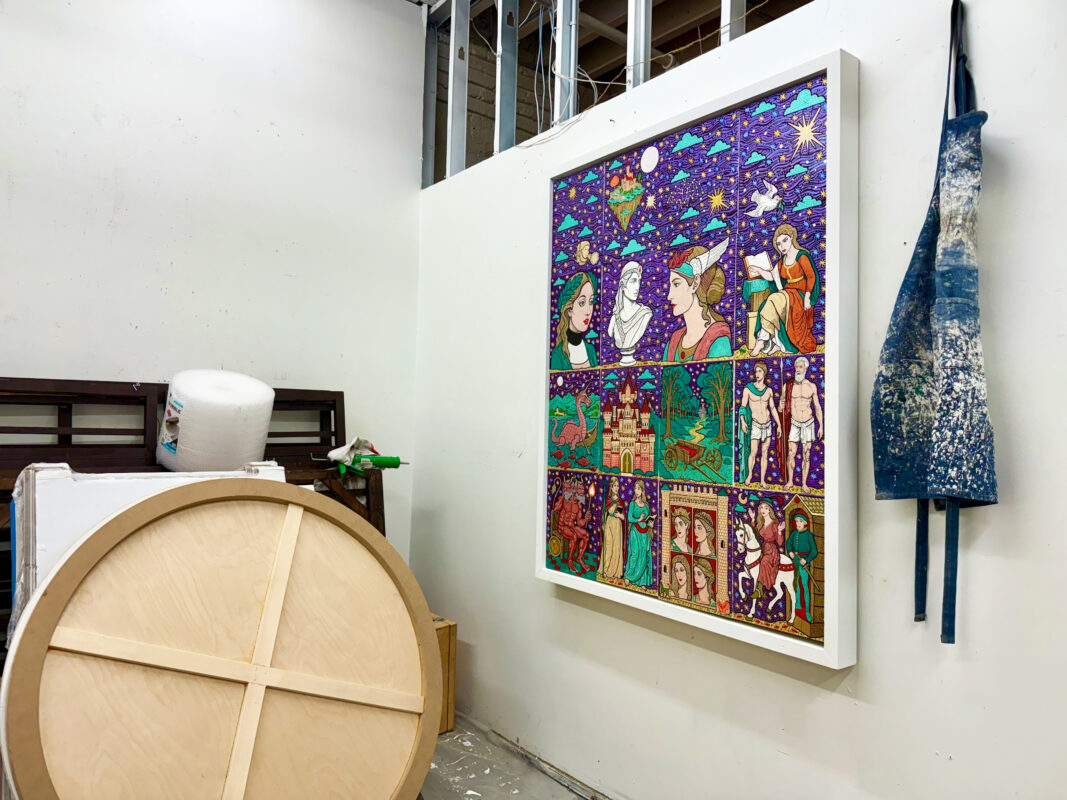
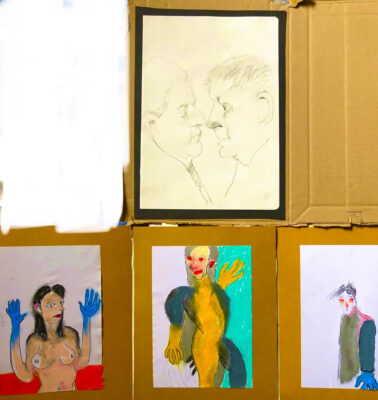
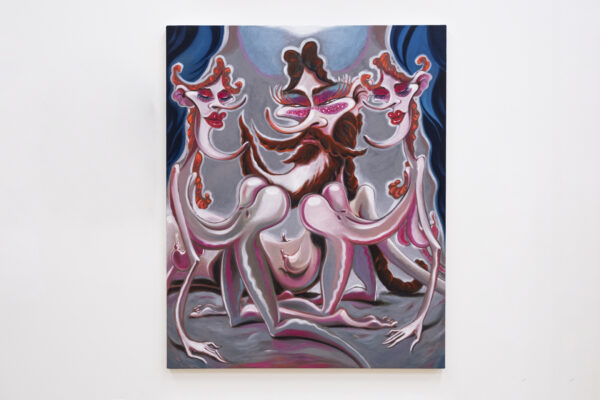
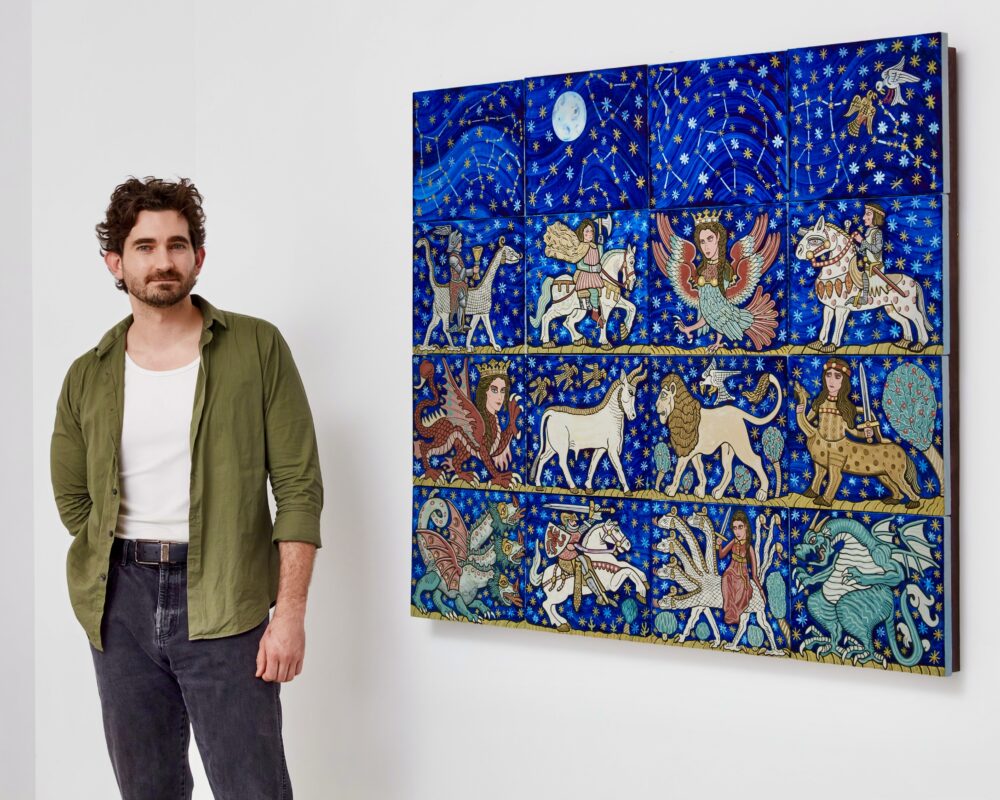
The Middle Ages and the International Gothic period are not nostalgic for me; they serve as a lens through which to reflect on our cosmopolitan present and the potential emergence of techno-feudal dynamics. By reinterpreting medieval symbols, manuscript aesthetics, and archetypal myths, I aim to create a dialogue between past and present, revealing how belief systems, hierarchies, and spectacle continue to shape our “digital age,” while the enduring power of myth remains. The medieval, in my work, becomes a way to show that castles and lords are not as far from us as we imagine — just as contemporary cinema is shaped by the 18th-century novel.
2. On Narrative Depth and Irony
Your art is thematically rich, going beyond simple historical reference and often incorporating irony. How do these elements function in your work?
Irony and historical reference in my practice work dialectically — they are not merely aesthetic tools, but conceptual movements. I approach art history as a visual inheritance of symbols, archetypes, and narratives. My work introduces an antithesis: humor, anachronism, and irony, destabilizing inherited forms. By combining reverence and irreverence, I aim to create a tension that drives imagery toward a new synthesis of beauty. Medieval cosmologies become living frameworks that intersect with contemporary identity, fantasy, and pop culture. Here, irony is not detachment but a tool for transformation; past and present interact, generating meaning within the image. Tradition is neither accepted nor outright rejected, but reinterpreted, critiqued, and reimagined, leaving space for new ideas to emerge.
3. Painting Technique
Which painting techniques do you prefer, and how do they affect your creative process and the final look of your works?
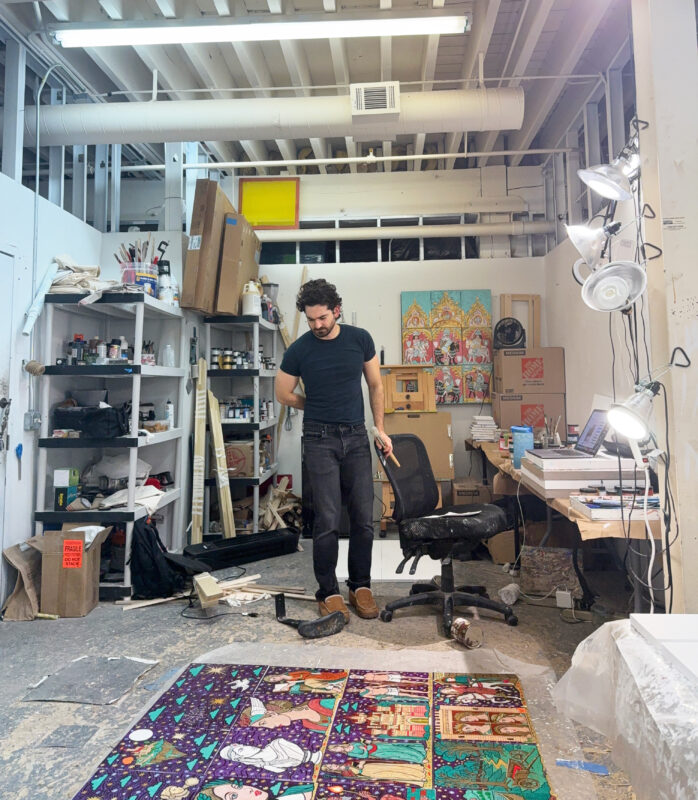
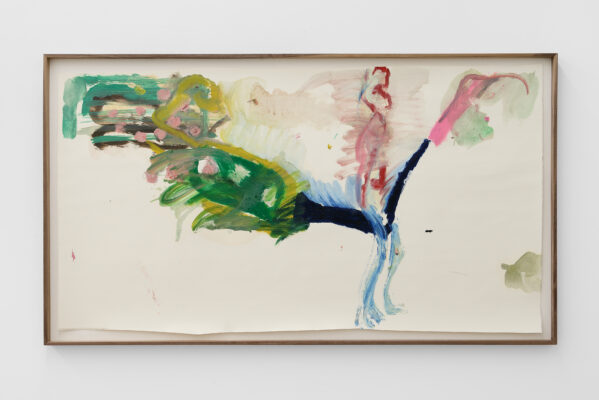
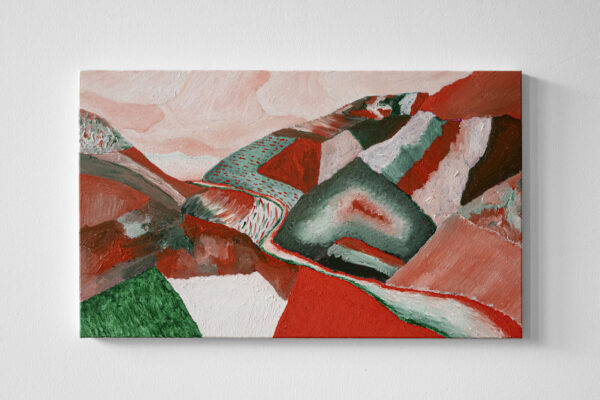
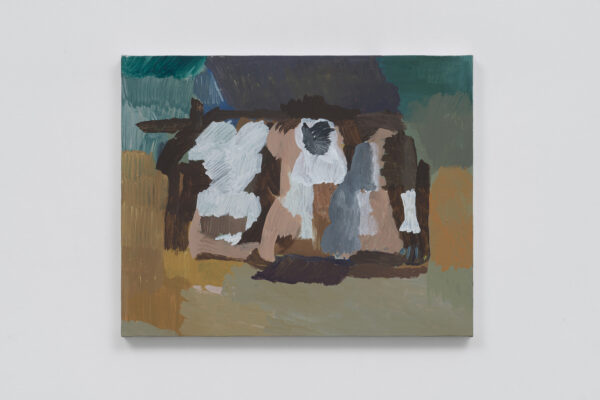
I enjoy preparing my own paints, using cottage cheese and borax to create casein paint, which gives me full control over the material and its properties. This DIY approach offers greater autonomy than pre-made tubes of paint. In recent years, I’ve been experimenting with different binders and mixed media practices to expand the expressive possibilities of my work.
4. Being an Emerging American Artist
How do you experience your identity as an emerging artist in the U.S.? What challenges and opportunities have you encountered?
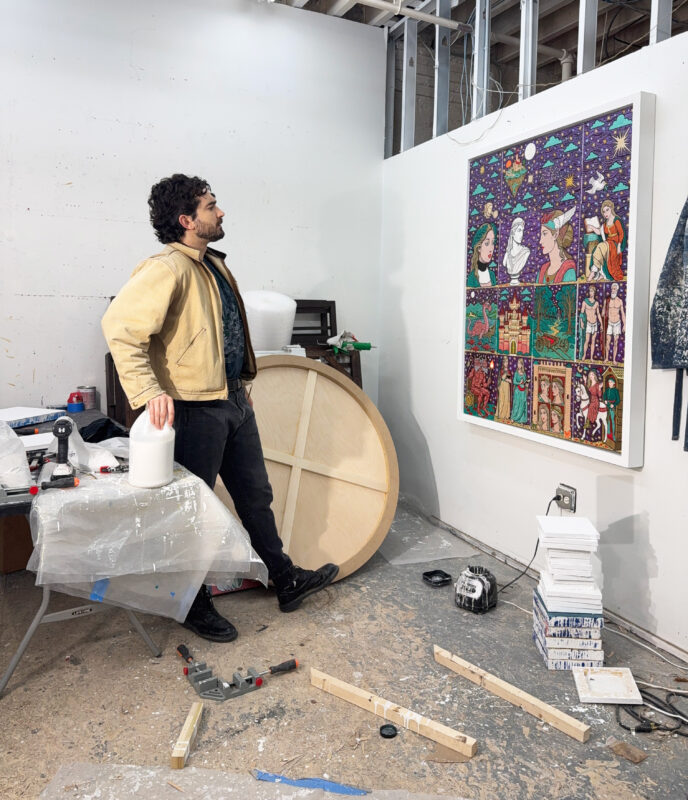
I am both a studio painter and an educator. Teaching grounds my practice, while exhibiting pushes me to grow with ambition. The U.S. art scene offers active galleries, engaged audiences, and opportunities for reinvention. My recent exhibitions and teaching roles have broadened my audience, who appreciate the mix of historical reference and contemporary narrative. Challenges include market unpredictability and competition for visibility, but balancing teaching with studio work keeps me motivated and inspired.
5. Your Solo Exhibition in Italy
What did it mean to have a solo exhibition in Italy, a country with a profound artistic tradition? Did it influence your work?
Having my first solo show in Italy was incredibly energizing. Working with Nashira Gallery has been a dream. Being surrounded by centuries of art, from medieval illumination to the Renaissance, made me more aware of the continuity of images across time. The experience deepened my practice, giving me confidence that my work can contribute meaningfully to contemporary art. It also influenced my approach to scale, composition, and ornamentation in relation to architectural space.